Biometric Turnstiles in Atlanta: When Fingerprint or Facial Recognition Makes Sense
A Credential Is Only Useful If You Know Who Is Using It
Access cards, key fobs, and mobile credentials are convenient, but they all have one thing in common: they can be shared, lost, borrowed, or used by someone other than the person they were originally assigned to. For many commercial and high-security facilities in Atlanta, that creates a gap between knowing which credential was used and knowing who actually walked through the entrance.
Biometric access control is designed to close that gap by linking access more directly to the individual. Instead of relying only on something a person carries, such as a badge or phone, biometric systems can use a fingerprint, facial profile, palm scan, or other unique identifier as part of the authentication process.
When biometric readers are integrated with turnstiles, the entrance becomes more than a physical barrier. The system can verify the user, confirm that access is authorized, and then release the turnstile or speed gate. This can be especially useful in environments where identity matters just as much as whether a valid credential is present.
Where Traditional Credentials Can Fall Short
Traditional access-control credentials are still appropriate for many properties, but they may not provide enough assurance in facilities with higher security requirements. A badge can confirm that someone has a valid card, but it cannot always confirm that the person holding that card is the employee, contractor, or authorized user it was issued to.
- Shared access cards: A badge may be passed from one person to another, especially if physical verification is limited.
- Lost credentials: A misplaced badge or key fob can create risk until it is reported and deactivated.
- High-security areas: Sensitive locations may require stronger identity verification before entry is allowed.
- Employee-only entrances: Biometrics can help verify that the person entering is actually the authorized employee.
- Restricted departments: Data rooms, research areas, control rooms, or secure production zones may need tighter access controls.
- Audit requirements: Facilities with compliance or reporting obligations may benefit from more reliable identity verification.
- Tailgating concerns: Turnstiles combined with verified credentials can help enforce one-person-at-a-time entry.
For a general office lobby, a mobile credential or access card may be completely sufficient. But at a government facility, data center, research lab, industrial operation, or other restricted property, verifying identity more precisely can add another layer of control.
That does not mean every entrance needs biometric technology. The right choice depends on the level of risk, the number of users, the type of facility, and how the access-control system is managed. The goal is not to add technology simply because it is available. The goal is to match the credential method to the security needs of the site.
For organizations searching for biometric turnstiles in Atlanta, GA, biometric access control, or commercial turnstile installation in Metro Atlanta, the first question should be whether stronger identity verification would solve a real access problem at the facility.

How Biometric Turnstile Access Actually Works
A biometric turnstile system combines identity verification with physical access control. The user approaches the entrance, presents the required biometric credential, and the access-control platform checks whether that person is authorized. If access is approved, the turnstile or speed gate releases and allows the individual to pass.
The exact process can vary depending on the technology being used. A fingerprint reader may require the user to place a finger on a sensor. Facial recognition can verify identity as the person approaches the entrance. Palm-based systems use characteristics of the hand or palm, while some facilities may combine biometrics with another credential for added security.
Atlanta Turnstiles can integrate turnstile systems with several credential types, including fingerprint, palm, facial recognition, RFID, mobile credentials, and QR codes. That flexibility allows facility managers to build an entrance around the level of security and convenience they actually need.
- Fingerprint readers: Provide direct user verification and are commonly used where controlled employee access is important.
- Facial recognition: Can provide contactless identity verification at entrances with high pedestrian traffic.
- Palm-based biometrics: Offer another way to verify identity without relying on a card or badge alone.
- RFID or keycards: Remain practical for many offices, campuses, and lower-risk access points.
- Mobile credentials: Allow users to present a smartphone instead of carrying a separate badge.
- QR credentials: Can work well for temporary visitors, contractors, or event-based access.
When Biometrics Are Worth the Extra Security
Biometrics make the most sense when the facility needs a higher level of confidence that the person entering is actually the authorized user. In lower-risk environments, a standard card system may be simpler and more cost-effective. In higher-security environments, identity verification can provide meaningful value.
Government and public-sector facilities may use biometric access to help protect restricted departments or records. Data centers may need tighter control around server areas and equipment rooms. Research facilities and laboratories may have intellectual property, controlled materials, or sensitive processes that require stricter entry rules.
Industrial properties can also benefit when certain zones are limited to trained or authorized employees. In these environments, biometric credentials can help reduce the risk of one worker using another employee's badge to enter a restricted area.
Corporate campuses and secure office facilities may use biometrics only at their highest-security entrances while relying on cards or mobile credentials elsewhere. This layered approach can provide stronger protection without requiring the same level of authentication at every door or turnstile.
Biometrics Do Not Have to Replace Every Other Credential
One of the biggest misconceptions about biometric access control is that a facility must choose between biometrics and traditional credentials. In reality, many systems can support multiple authentication methods at the same time.
Employees might use facial recognition or fingerprint verification at secure turnstiles, while visitors receive temporary QR credentials. A lower-security lobby could use mobile credentials, while a restricted department requires both a badge and a biometric factor.
This gives security teams flexibility to match the credential level to the risk of each entrance. For organizations considering fingerprint access control in Atlanta, facial recognition access control, or biometric turnstile systems in Georgia, a mixed-credential strategy can often provide a better balance between security and convenience.
The Reader Is Only One Part of a Secure Entrance
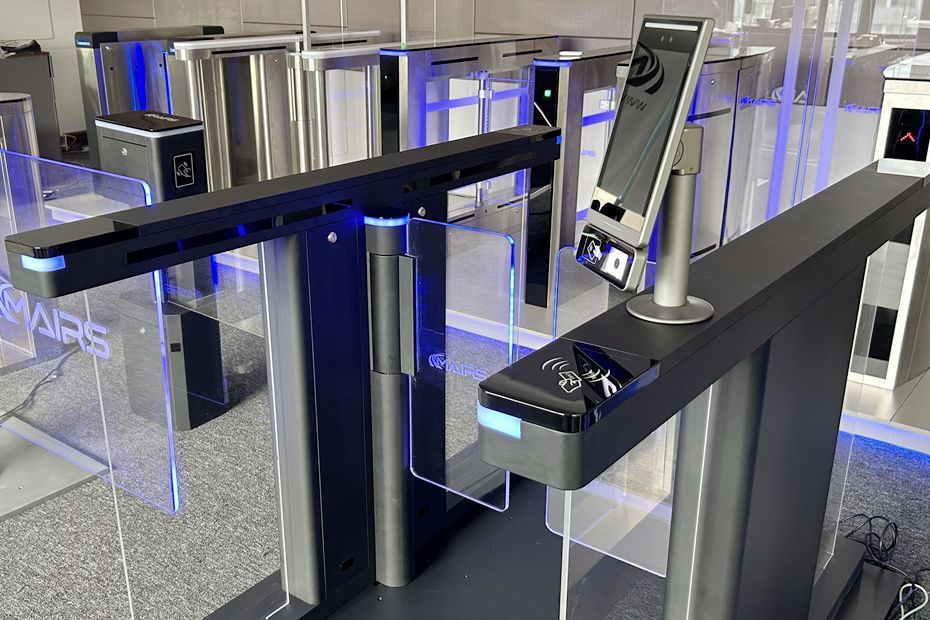
A biometric reader does not create a complete security entrance on its own. The reader, access-control software, turnstile, emergency functions, visitor process, and surrounding security systems all need to work together.
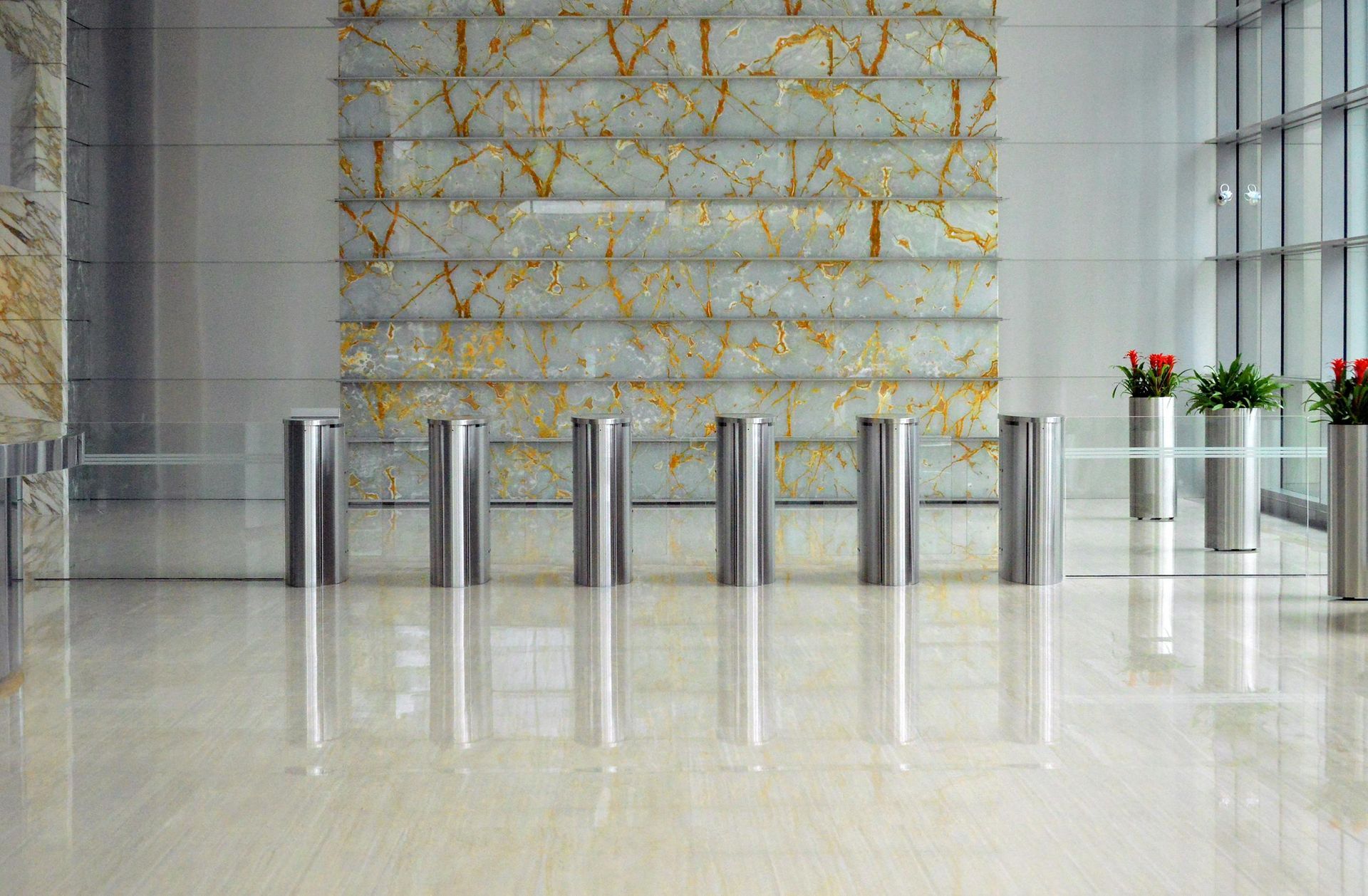
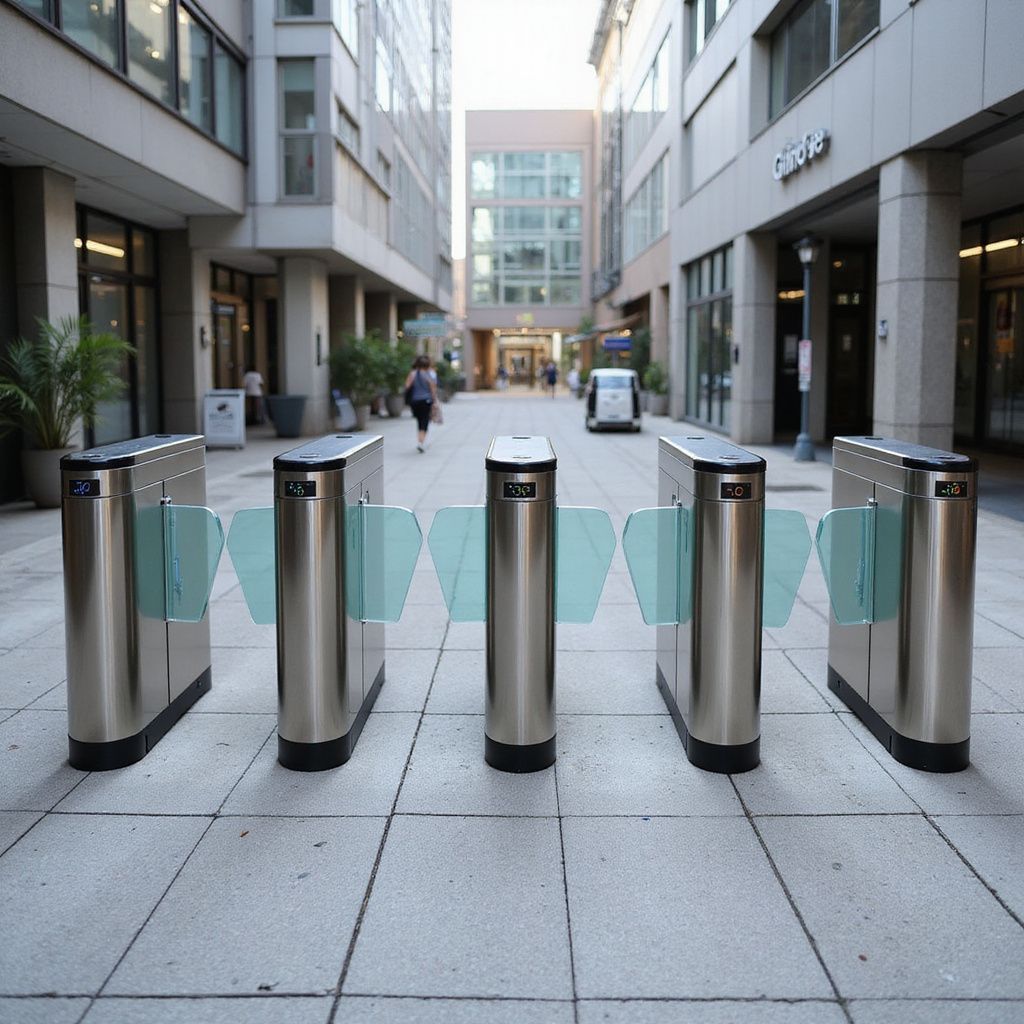
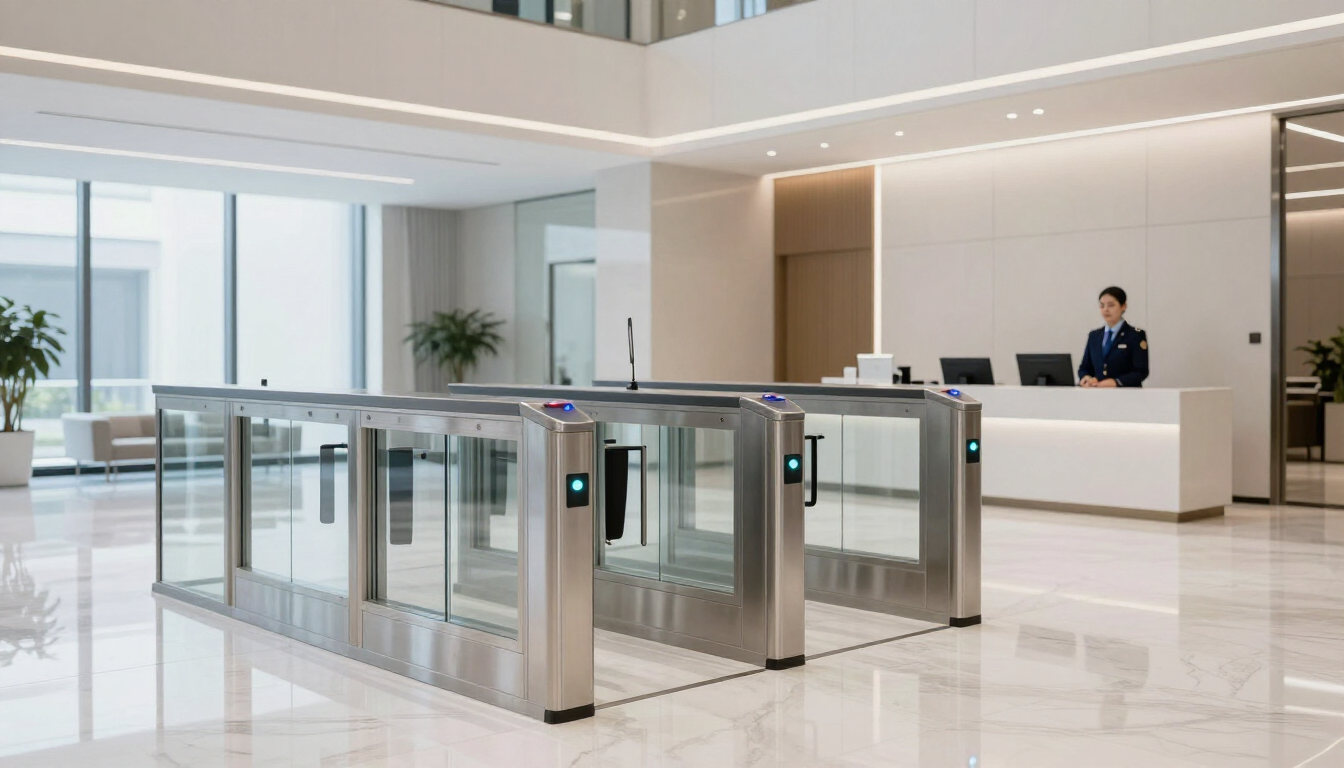
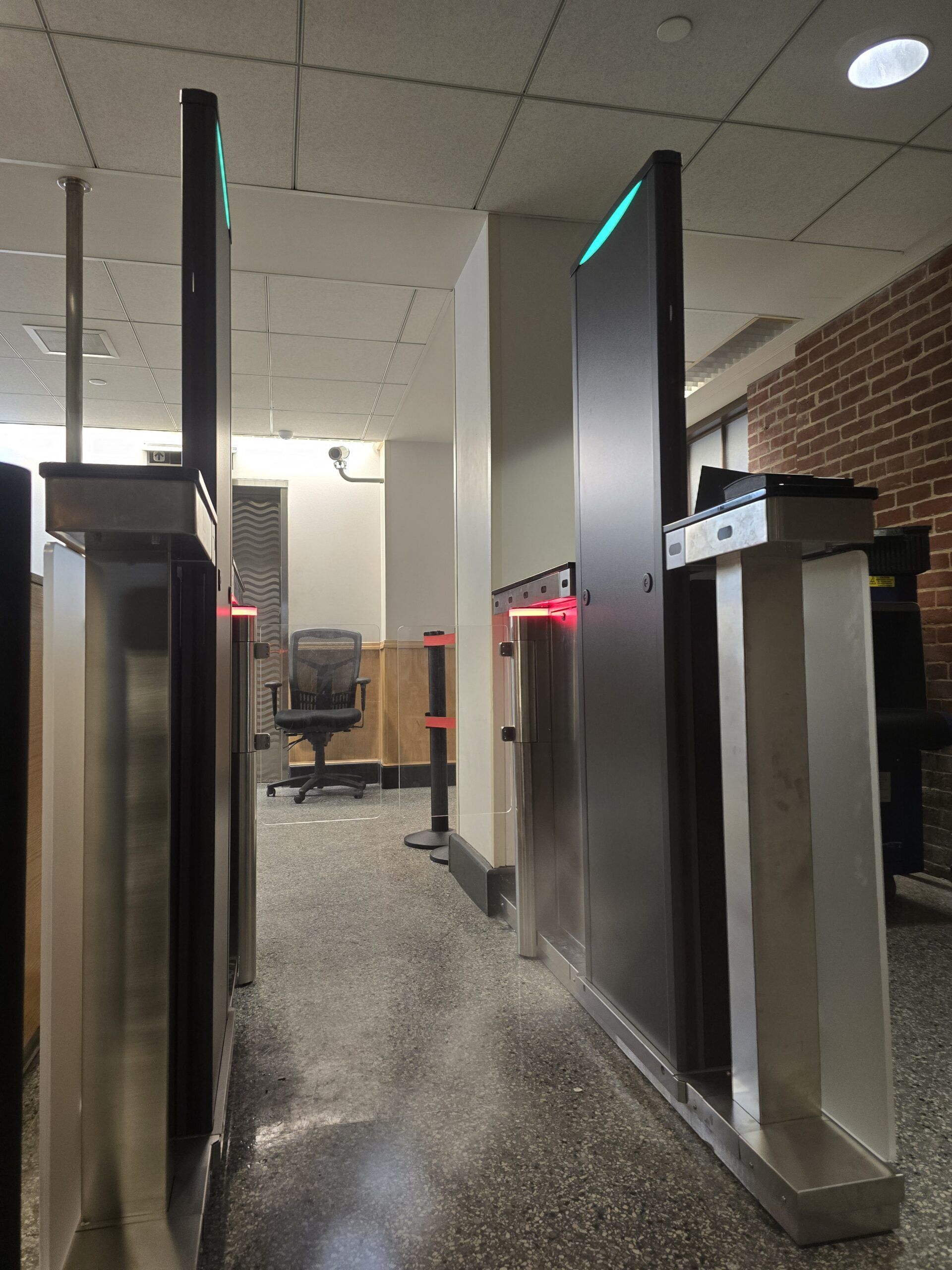
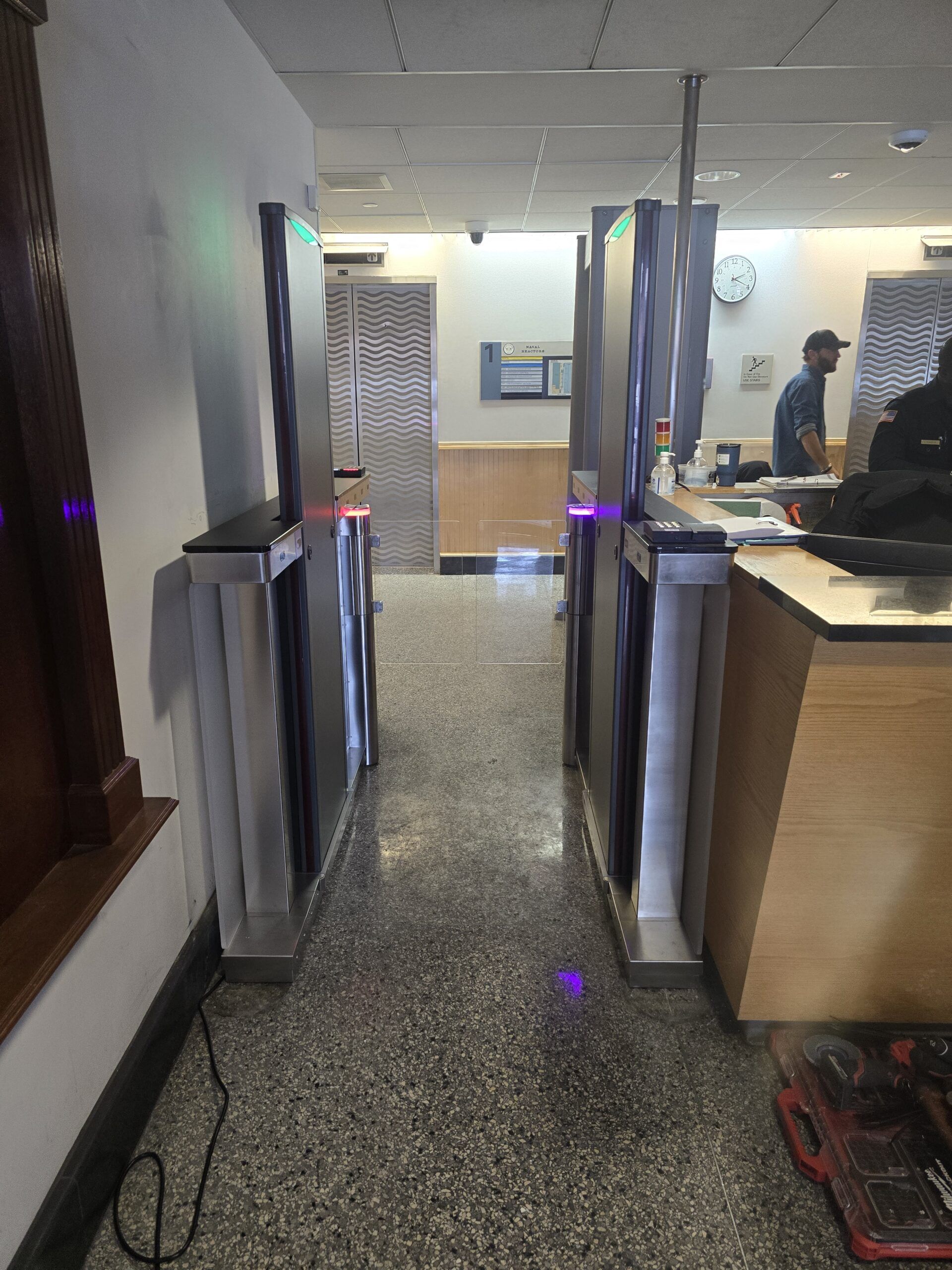
The physical turnstile type is one of the first considerations. Optical turnstiles and speed gates can be well suited to professional office lobbies and high-traffic corporate entrances. Full-height turnstiles can provide a stronger physical barrier for industrial properties, secure outdoor areas, stadiums, and other controlled environments.
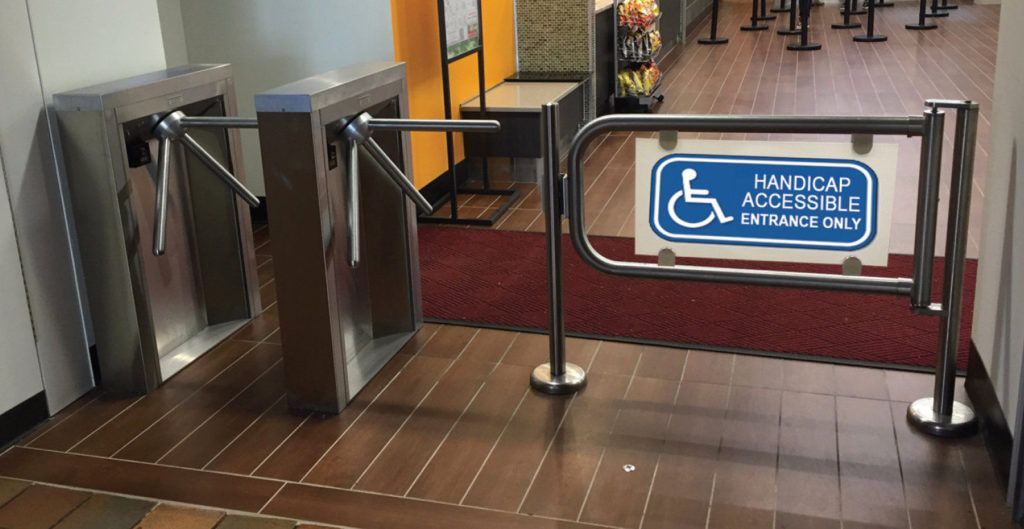
ADA-accessible lanes should also be part of the planning process. An entrance needs to provide accessible passage while maintaining the same overall access-control strategy. Visitor management, emergency egress, fire-system integration, and after-hours access should all be considered before installation.
- Optical turnstiles: Work well in corporate lobbies and other environments where security and appearance are both important.
- Speed gates: Can support efficient pedestrian flow while maintaining controlled access.
- Full-height turnstiles: Provide a stronger physical barrier for higher-security environments.
- ADA-accessible lanes: Ensure the entrance accommodates users with mobility needs.
- Visitor-management systems: Help control temporary access for guests, contractors, and vendors.
- Access-control software: Manages permissions, credential status, schedules, and access records.
- CCTV integration: Can add visual verification and monitoring around secure entry points.
- Emergency-release systems: Help ensure the entrance responds properly during emergency conditions.
Atlanta Turnstiles works with major access-control platforms including HID, Lenel, Brivo, Avigilon, Gallagher, and Paxton. This can make it possible to integrate new turnstile and biometric hardware with an existing security infrastructure rather than forcing the facility to manage a completely separate system.
What Facility Managers Should Decide Before Choosing Biometrics
The best biometric system starts with a clear understanding of the facility's security goals. Some properties need stronger identity verification at every entrance, while others only need it around specific departments or restricted areas.
- Determine the level of security required at each entrance.
- Estimate the number of daily users and peak pedestrian traffic.
- Decide whether visitors will use the same entrance as employees.
- Identify whether the system will be installed indoors, outdoors, or both.
- Review the access-control platform already in use.
- Plan for ADA-accessible entry lanes.
- Determine whether detailed audit trails or access records are required.
- Decide whether users should have multiple credential options.
- Consider how the system should respond during emergencies or power loss.
Privacy and credential-management policies should also be part of the planning process. Biometric systems involve identity data, so organizations should determine how enrollment, storage, access permissions, and credential removal will be handled under their internal policies and applicable requirements.
Biometric Turnstile Installation in Atlanta and the Southeast
Atlanta Turnstiles provides turnstile installation, access-control integration, security screening, and entrance-control solutions for facilities throughout Metro Atlanta and the Southeastern United States. Their systems can incorporate biometric readers, mobile credentials, RFID, QR access, visitor management, and other security technologies depending on the needs of the property.
Organizations in Atlanta and throughout Georgia, Alabama, Tennessee, South Carolina, North Carolina, and surrounding Southeastern markets can benefit from designing pedestrian access as a complete system rather than treating the turnstile and credential reader as separate pieces of equipment.
For facilities that need stronger identity verification, biometric technology can add another layer of control at secure entrances. Fingerprint, facial recognition, and palm-based systems can help confirm that the person using an access credential is actually the authorized individual.
If you are searching for biometric turnstiles in Atlanta, GA, fingerprint access control, facial recognition access control, commercial turnstile installation, or secure entrance systems in the Southeast, Atlanta Turnstiles can help design a solution around the facility's traffic flow, security level, and existing access-control platform.
Recent Projects