How to Plan an ADA-Compliant Turnstile Entrance for Atlanta Commercial Buildings
This is a subtitle for your new post
The body content of your post goes here. To edit this text, click on it and delete this default text and start typing your own or paste your own from a different source.
A Secure Entrance Should Work for Every Authorized User
A commercial entrance should control who enters the property without creating unnecessary obstacles for employees, tenants, visitors, or guests. When a turnstile system is planned correctly, security and accessibility can work together. When accessibility is treated as an afterthought, however, even a sophisticated access-control system can become inconvenient, confusing, or difficult to manage.
For commercial buildings in Atlanta and throughout the Southeast, an accessible entrance should be considered from the beginning of the design process. Installing a row of narrow standard turnstiles and adding a separate gate later may appear to solve the problem, but the result does not always provide a smooth or secure experience.
An accessible lane may be needed by more people than property managers initially expect. It is not used only by wheelchair users. A wider, carefully planned passage can also help people using walkers or crutches, visitors with service animals, parents pushing strollers, employees carrying equipment, and delivery personnel moving carts through the building.
People who may need an accessible or wider entrance include:
- Wheelchair and mobility-device users
- People using walkers, canes, or crutches
- Visitors accompanied by service animals
- Parents or caregivers pushing strollers
- Employees carrying tools, packages, or equipment
- Delivery personnel using carts or hand trucks
- Travelers entering with luggage
- Visitors who need additional time to move through the lane
The accessible route should feel like a normal part of the secured entrance rather than a separate or inconvenient exception. Ideally, it should be located beside the standard turnstile lanes, use the same access-control system, and allow authorized users to enter without waiting for a security employee to unlock an unrelated door.
When the accessible gate is placed far from the main entrance, visitors may not know where to go. They may approach the standard lanes first, realize they cannot pass comfortably, and then need assistance from staff. This creates an awkward experience for the visitor and additional work for the security team.
A side door that bypasses the normal access-control process can also weaken security. If staff members routinely prop the door open, manually release it, or allow several people to enter at once, the building may lose the entry verification and activity records provided by the turnstile system.
Warning signs that an existing entrance may need accessibility improvements include:
- The accessible gate is separated from the main turnstile bank
- A security employee must manually unlock the gate for every user
- The route to the gate is blocked by furniture, equipment, or queuing barriers
- The credential reader is difficult to reach from a seated position
- The barrier closes before some users can pass safely
- The opening is too narrow for carts, wheelchairs, or mobility devices
- Visitors are directed through an unsecured office or service door
- There is limited space to approach, turn, or exit the lane
- Instructions are unclear or difficult to see
- The accessible lane does not record entries in the access-control system
Credential-reader placement is an especially important detail. A reader may work correctly from a technical standpoint but still be positioned too high, too far from the gate, or too close to another object. Users should be able to approach the lane, present their credential, and continue through the opening without making an awkward movement or backing away from the barrier.
The gate’s timing and movement should also match the people who will use it. A barrier that opens only briefly may work for an employee walking quickly through the lane but create difficulty for someone using a mobility device or moving a cart. Sensors and control settings should allow enough time for safe passage while still preventing unauthorized entry.
Accessibility does not mean reducing security. A well-designed accessible lane can use the same badges, mobile credentials, QR codes, biometric readers, visitor passes, and entry records as the standard lanes. The physical opening may be wider, but the authorization process can remain consistent throughout the entrance.
For example, a visitor can check in through the building’s visitor-management system, receive a temporary credential, and present it at the accessible gate. The system can confirm authorization, open the barrier, monitor the person’s movement through the lane, and record the event just as it would for any other approved user.
Property managers should also think about how the entrance performs during busy periods. A single accessible gate may serve visitors, deliveries, employees with equipment, and people with mobility needs. If it is positioned poorly or requires repeated staff intervention, congestion can develop around the entrance even when the standard turnstile lanes are moving efficiently.
Questions to consider when reviewing the entrance include:
- Can users reach the accessible lane without leaving the normal entrance path?
- Is there enough clear floor space on both sides of the gate?
- Can the credential reader be reached comfortably?
- Does the gate remain open long enough for safe passage?
- Can the lane accommodate wheelchairs, service animals, luggage, or carts?
- Does every authorized entry create a record in the access-control platform?
- Can visitors understand how to use the lane without staff assistance?
Planning these details early can prevent the accessible lane from becoming an operational weakness. It can also help the property create a more professional first impression while maintaining consistent control over every authorized entry.
Atlanta Turnstiles can evaluate the entrance layout, expected pedestrian traffic, access-control requirements, and accessibility needs before equipment is selected. This allows the turnstile bank and wider gate to function as one coordinated security system rather than a collection of unrelated components.

What Features Should an Accessible Turnstile Lane Include?
An accessible turnstile lane requires more planning than simply choosing a wider opening. The entire path should support a safe, comfortable, and predictable movement from the unsecured side of the entrance to the secured side.
The approach area should provide enough clear space for a user to move into position without being blocked by furniture, security desks, sign stands, planters, or neighboring turnstiles. The exit side should offer similar clearance so the user can leave the lane without immediately encountering another obstacle.
Important accessible-lane features may include:
- A wider gate opening appropriate for mobility devices and carts
- Clear approach and exit space
- A credential reader positioned within comfortable reach
- Adjustable opening and closing times
- Sensors that monitor the entire passage area
- Smooth flooring without raised transitions or trip hazards
- Visible instructions and access indicators
- Audio or visual confirmation when access is approved or denied
- Barrier movement designed to reduce the risk of contact with the user
- Integration with the building’s visitor and access-control systems
Several types of equipment can be used to create an accessible entrance. The right option depends on the building, security level, available space, and appearance the property wants to maintain.
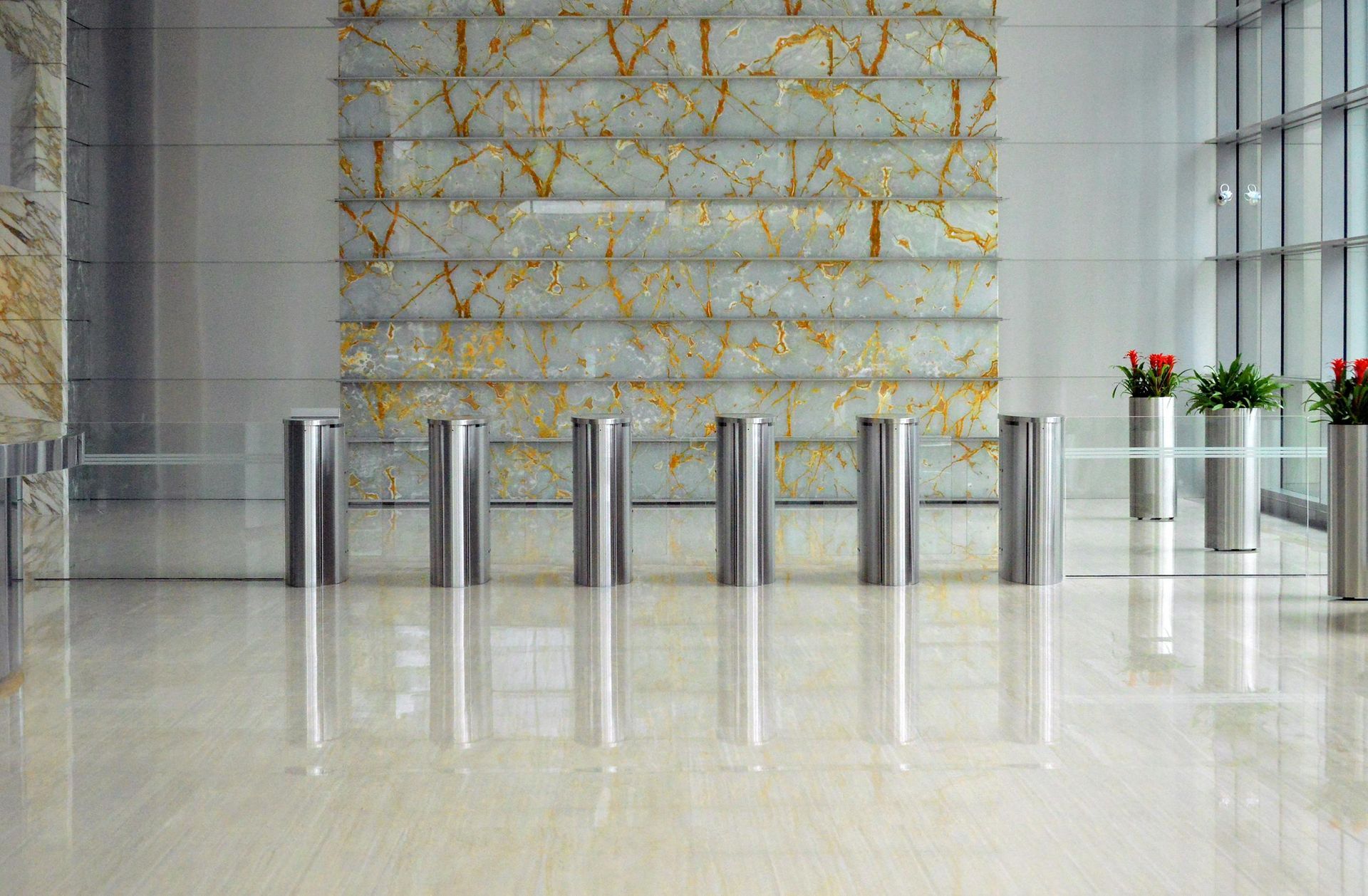
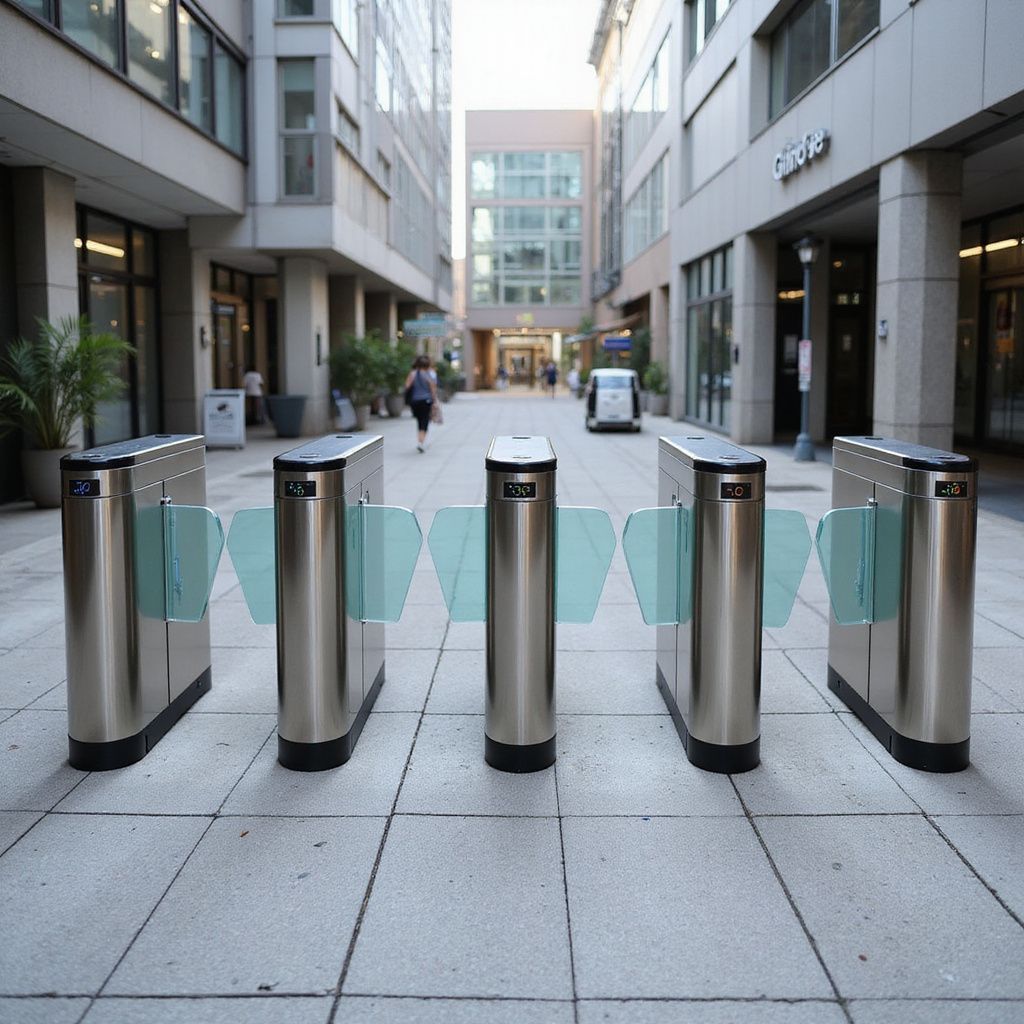
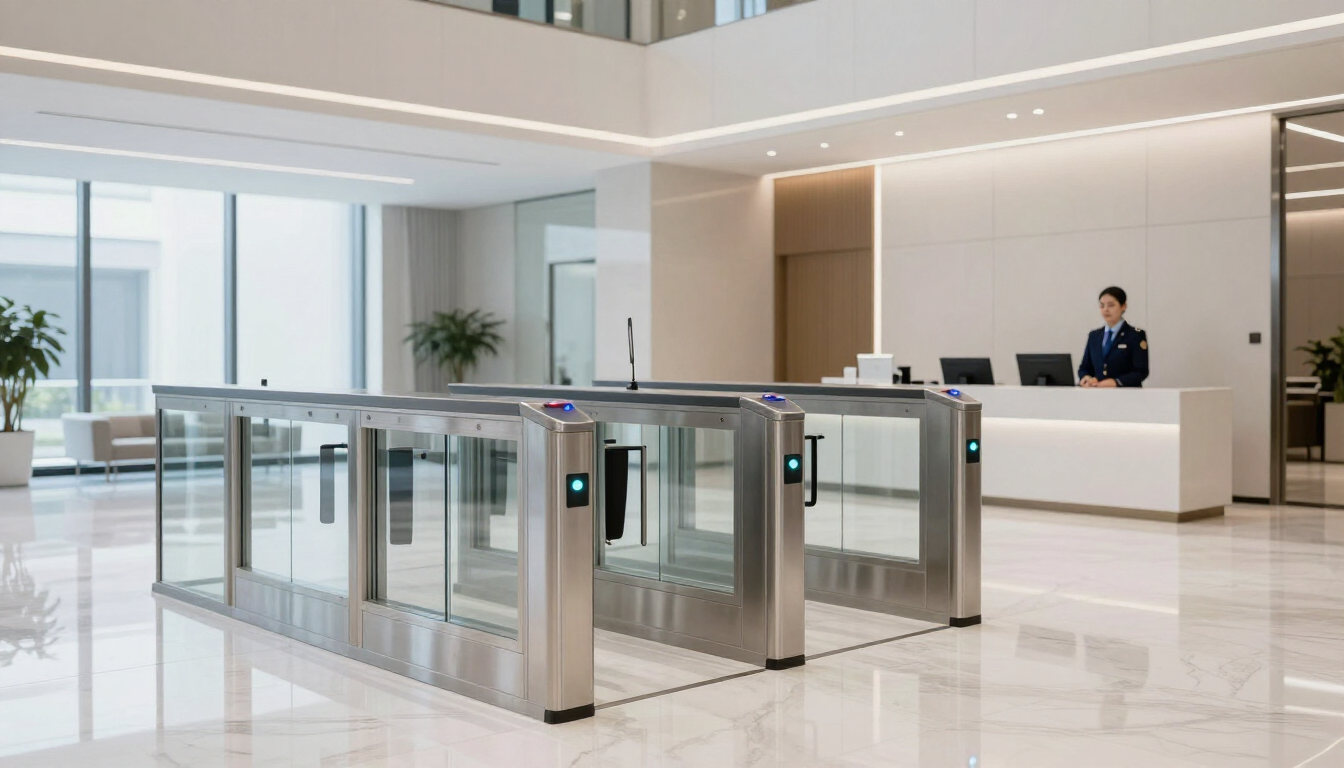
Wider optical turnstile lanes are commonly used in corporate lobbies, office buildings, and other commercial interiors. They can provide a modern appearance while using sensors and moving barriers to manage pedestrian entry. A wider lane can be incorporated into the same turnstile bank as the standard lanes.
Swing gates are another option. A motorized swing barrier can open to create a wider passage while remaining connected to the access-control system. These gates may be installed beside optical turnstiles or other controlled-entry equipment.
Some facilities use an ADA side gate positioned beside a bank of traditional turnstiles. This can work well when the side gate is integrated with the same credentials, sensors, alarms, and entry records as the rest of the system. It should not function as an uncontrolled opening that requires staff to make exceptions throughout the day.
How Accessible Gates Integrate With Access Control
The accessible lane should follow the same general authorization process as the standard turnstile lanes. A wider opening does not need to mean a less secure entrance. The user can still be required to present an approved credential before the barrier opens.
Depending on the facility, the accessible gate may work with:
- Employee identification badges
- Mobile phone credentials
- QR-code visitor passes
- Biometric readers
- Temporary contractor credentials
- Event or appointment passes
- Reception-desk release controls
- Visitor-management platforms
A typical accessible entry process may work like this:
- The user approaches the wider turnstile or gate lane.
- The credential is presented at a reachable reader.
- The access-control platform verifies the user’s authorization.
- The barrier opens and allows additional passage time when configured.
- Sensors monitor the user as they move through the lane.
- The entry event is recorded in the access-control system.
- The gate closes after the lane is confirmed to be clear.
Sensor placement is essential because the system must distinguish between normal passage, someone moving more slowly, and an attempted unauthorized entry. A properly configured lane can give an approved user enough time to pass while still detecting tailgating or movement in the wrong direction.
The barrier should not close simply because a fixed number of seconds has passed. The system should also use sensors to confirm whether the passage area remains occupied. This is especially important when the lane serves mobility-device users, delivery carts, or people moving large equipment.
Accessible gates can also be connected to alarms and security notifications. If someone attempts to force the barrier, enters without authorization, or follows another person through the lane, the system may alert security personnel or record the event for later review.
Visitor-management procedures should include the accessible entrance as well. A visitor should not be required to receive a credential for the standard lanes and then discover that it does not operate the wider gate. Credentials and permissions should be configured to work with the lane the visitor actually needs to use.
The same principle applies to delivery personnel and contractors. The building may issue temporary access that permits entry through the accessible gate during an approved time window. This creates a more controlled process than asking security staff to open a separate door whenever a cart or large item arrives.
Integration can also improve entry reporting. Property managers and security teams may be able to review:
- Which credential was used
- Which lane the person entered through
- The date and time of entry
- Whether the barrier opened normally
- Whether an alarm or exception occurred
- Whether access was granted remotely by staff
This information helps the accessible lane remain part of the building’s overall security strategy. Staff do not have to choose between providing access and maintaining accountability.
Atlanta Turnstiles can integrate accessible optical gates and swing barriers with major access-control platforms, visitor systems, credential readers, and security-management tools. The final design can be configured around the building’s traffic patterns, authorization rules, and operational needs.
The goal is to create an entrance that feels simple to the authorized user while providing the facility with reliable verification, safe barrier movement, and consistent entry records.

How Should Turnstiles Respond During an Emergency?
A turnstile system is designed to control entry, but it cannot interfere with the facility’s required emergency-exit strategy. During a fire alarm, power failure, evacuation, or other emergency, occupants must be able to leave the secured area according to the building’s approved safety plan.
Emergency behavior should be discussed before the equipment is installed. The turnstiles, wider accessible gate, access-control platform, fire-alarm system, and building-safety procedures should be planned as connected parts of the entrance rather than separate systems.
Emergency operating considerations may include:
- Integration with the building’s fire-alarm system
- Barrier behavior during a power loss
- Fail-safe or fail-secure equipment configuration
- Manual release controls for security staff
- Free-egress pathways around or through the turnstile bank
- Backup power for selected equipment
- Emergency signage and staff procedures
- Accessible evacuation routes
- Testing of alarms, barriers, and release devices
Fail-safe and fail-secure configurations describe how controlled equipment responds when power or a control signal is lost. The appropriate configuration depends on the entrance, security requirements, building layout, and applicable safety expectations. This decision should be made during system planning rather than after installation.
In many interior applications, optical turnstile barriers may be configured to open, retract, or allow free exit when the fire-alarm system activates. The exact response depends on the selected equipment and the approved design.
Full-height turnstiles require a different approach because they are often installed at secured perimeters, industrial sites, transit locations, or outdoor facilities. Emergency exit doors, gates, and release controls may be planned beside the turnstile rather than relying on the rotating mechanism as the only evacuation path.
Facility managers should answer several questions before approving the entrance design:
- How many people use the entrance during peak periods?
- Is a properly located accessible lane included?
- Can users reach the credential readers comfortably?
- What happens when electrical power is interrupted?
- How does the equipment respond when the fire alarm activates?
- Is there a clearly identified free-egress route?
- Will trained security personnel be present?
- How will visitors, contractors, and delivery personnel enter?
- Does the entrance need to accommodate carts, luggage, or equipment?
- How will the system be inspected and tested after installation?
A professional site survey helps answer these questions by reviewing the actual entrance rather than relying only on floor plans or equipment specifications. The survey can evaluate available floor space, traffic direction, anchoring conditions, nearby doors, electrical service, network connections, emergency pathways, and credential-reader locations.
The type of turnstile also influences the design. Optical turnstiles are often selected for commercial lobbies where appearance, faster pedestrian flow, and wider accessible lanes are priorities. Full-height turnstiles provide a more substantial physical barrier and are generally used where stronger perimeter control is required.
After installation, the complete system should be tested under normal and emergency conditions. Testing may include:
- Standard employee credentials
- Visitor and temporary credentials
- Accessible-lane opening time
- Barrier and safety-sensor operation
- Tailgating and unauthorized-entry alarms
- Manual release controls
- Fire-alarm activation
- Power-loss behavior
- Entry and alarm logging
- Communication with the access-control platform
Testing should confirm not only that the equipment turns on, but also that authorized users can move through the entrance comfortably and that the correct emergency response occurs. Staff should understand how to release the barriers, assist visitors, and respond to alarms or equipment problems.
ADA-Compliant Turnstile Installation in Atlanta and the Southeast
Atlanta Turnstiles provides commercial turnstile planning, installation, and integration for properties throughout Metro Atlanta, Georgia, and the Southeastern United States. Systems can be designed for corporate offices, government facilities, stadiums, campuses, industrial properties, residential buildings, transportation facilities, and other secured locations.
Available entrance solutions may include:
- Optical turnstiles with standard and wider lanes
- ADA-accessible swing gates
- Full-height turnstiles and perimeter-security entrances
- Credential-reader installation
- Mobile, badge, QR-code, and biometric integration
- Visitor-management integration
- Tailgating and direction-control sensors
- Emergency release and fire-alarm integration
- Access-control software integration
- System testing and staff training
The best entrance design depends on the facility’s security goals, pedestrian volume, available space, architectural style, and accessibility needs. A corporate lobby may benefit from modern optical turnstiles with a coordinated wider lane, while an industrial perimeter may require full-height equipment and a separate accessible gate.
Professional planning can also help the property avoid common installation problems such as crowded lanes, poorly positioned readers, inadequate exit space, blocked emergency routes, and side gates that are not connected to the access-control system.
Atlanta Turnstiles can review the site, recommend suitable equipment, coordinate the accessible and standard lanes, and integrate the system with the building’s existing security technology. The completed entrance can provide reliable access control without requiring authorized users to navigate an inconvenient or unsecured alternative route.
If your Atlanta commercial building is planning a new secured entrance or replacing an outdated turnstile system, contact Atlanta Turnstiles. A professional site evaluation can help you create an entrance that supports accessibility, emergency egress, pedestrian flow, and dependable access control.
A well-planned turnstile entrance should do more than restrict unauthorized access. It should provide a secure, understandable, and comfortable path for every authorized person who needs to enter the facility.
Recent Projects