How to Keep Commercial Turnstiles Working Reliably: Maintenance Tips for Atlanta Facilities
The body content of your post goes here. To edit this text, click on it and delete this default text and start typing your own or paste your own from a different source.
Why a Turnstile Needs Attention After Installation
Installing a commercial turnstile is only the beginning of its working life. In a busy Atlanta office building, manufacturing facility, stadium, school, government property, or transportation environment, a turnstile may be used hundreds or even thousands of times as people move through the facility. Over time, that repeated use can create normal wear on mechanical and electronic components.
Turnstiles also do more than physically control entry. Modern systems often communicate with card readers, mobile credentials, biometric devices, visitor management platforms, and other access control technology. That means reliable operation depends on several components working together every time someone approaches the entrance.
Routine turnstile maintenance can help identify developing problems before they become larger disruptions. A slightly misaligned barrier, unusual noise, inconsistent sensor, or intermittent credential problem may seem minor when it first appears. If ignored, however, the issue could eventually result in an unusable lane or an entrance that does not operate as intended.
Warning signs that a commercial turnstile may need professional service include:
- Unusual grinding, clicking, or mechanical noises
- Barriers moving more slowly than normal
- A turnstile that does not consistently return to its proper position
- Intermittent locking or unlocking problems
- Credential readers that work inconsistently
- Unexpected sensor alarms or false detections
- A lane occasionally refusing authorized users
- Visible looseness, movement, or misalignment in the equipment
These symptoms should not automatically be blamed on one particular component. A lane that fails to open could have a mechanical problem, but the issue could also involve a reader, sensor, wiring connection, access control permission, or communication between systems. Proper troubleshooting helps identify the actual source instead of replacing parts unnecessarily.
Downtime Can Affect More Than Building Security
When a turnstile stops operating correctly, the impact can extend beyond the security department. Closing one lane in a busy lobby can create longer lines during morning arrival. A malfunctioning entrance at a manufacturing or logistics facility can interfere with shift changes. At a stadium or high-traffic venue, even a temporary problem can affect the movement of large numbers of people.
Preventive maintenance is intended to reduce the chances of those unexpected interruptions. Regular inspections provide an opportunity to look for wear, test operation, and address small issues while the equipment is still functioning rather than waiting for a complete failure.
Outdoor turnstiles deserve particular attention because they operate in changing environmental conditions. Full-height systems used around industrial facilities, campuses, and secured perimeters may be exposed to heat, humidity, rain, dirt, and debris. Equipment selected for outdoor use is designed to handle those conditions, but it still benefits from appropriate inspection and maintenance.
Atlanta Turnstiles provides installation, maintenance, repairs, troubleshooting, and upgrades for commercial turnstile systems in Metro Atlanta and throughout the Southeast. Keeping the equipment properly maintained can help facilities protect their investment while supporting reliable security and pedestrian flow over the long term.

Is the Problem the Turnstile or the Access Control System?
One of the challenges of troubleshooting a modern turnstile is that several systems may be involved in a single entry event. When an employee presents a badge, for example, the reader must recognize the credential, the access control system must determine whether that person is authorized, and the turnstile must receive and respond to the command. Sensors and barrier mechanisms then help manage the person's movement through the lane.
If any part of that process does not work correctly, the user may simply experience a turnstile that will not let them through. The visible symptom is the same even though the underlying causes can be very different.
Atlanta Turnstiles works with systems that can integrate with RFID cards, mobile credentials, QR codes, biometric readers, keypads, visitor management systems, CCTV, and cloud-based access management platforms. As these integrations become more sophisticated, proper troubleshooting becomes increasingly important when something goes wrong.
Potential sources of turnstile problems can include:
- Mechanical wear or obstruction
- Barrier alignment problems
- Sensor errors or improper detection
- Credential reader issues
- Wiring or electrical connections
- Access control permissions or configuration
- Communication between the turnstile and security platform
- Damage or movement around mounting and anchoring points
This is why simply resetting a system may not be a long-term solution. A reset might temporarily restore operation, but recurring faults usually deserve further investigation. Keeping notes about when a problem occurs can also be useful. If one lane fails only during periods of heavy traffic or one credential type consistently causes trouble, that information can help narrow down the cause.
What a Turnstile Service Inspection Should Check
Maintenance should look at the complete entrance rather than only the most obvious moving parts. Mechanical operation is important, but so are the sensors, readers, electrical components, mounting, and connection to the facility's access control system.
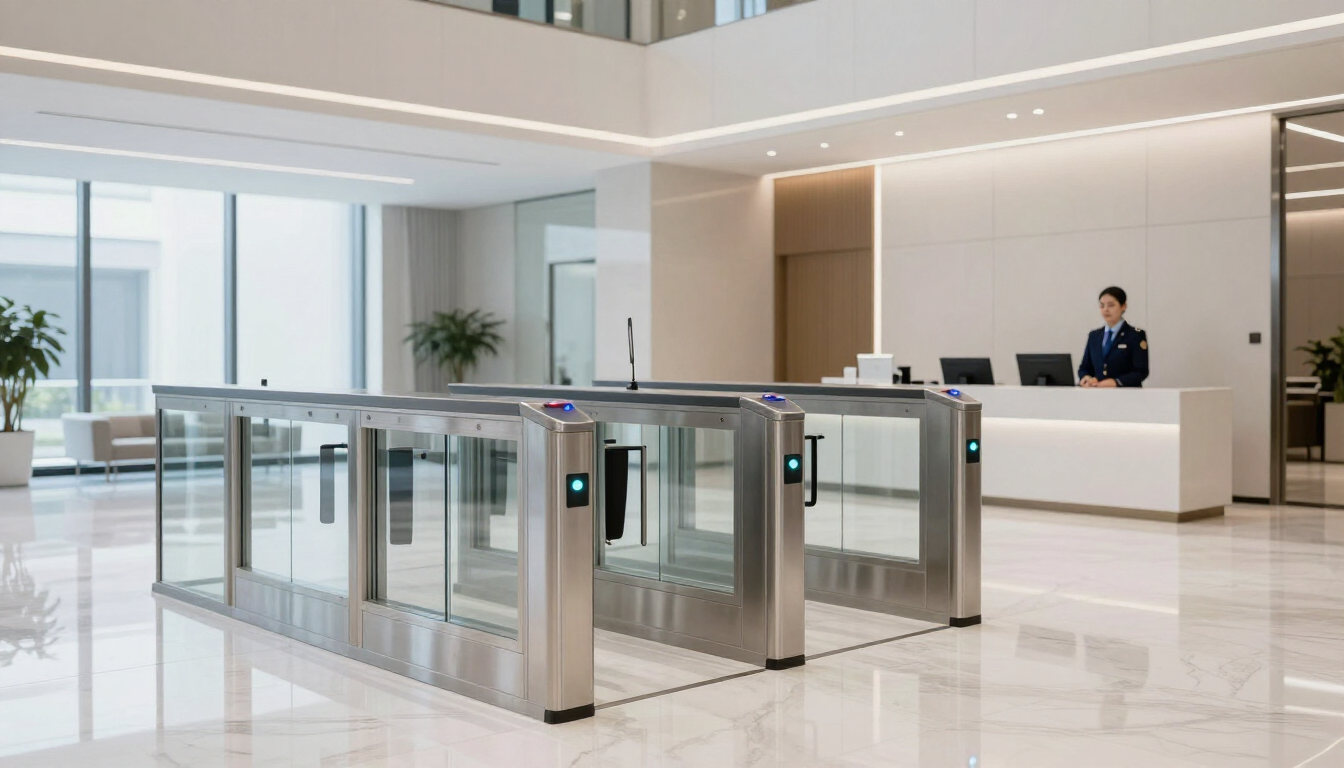
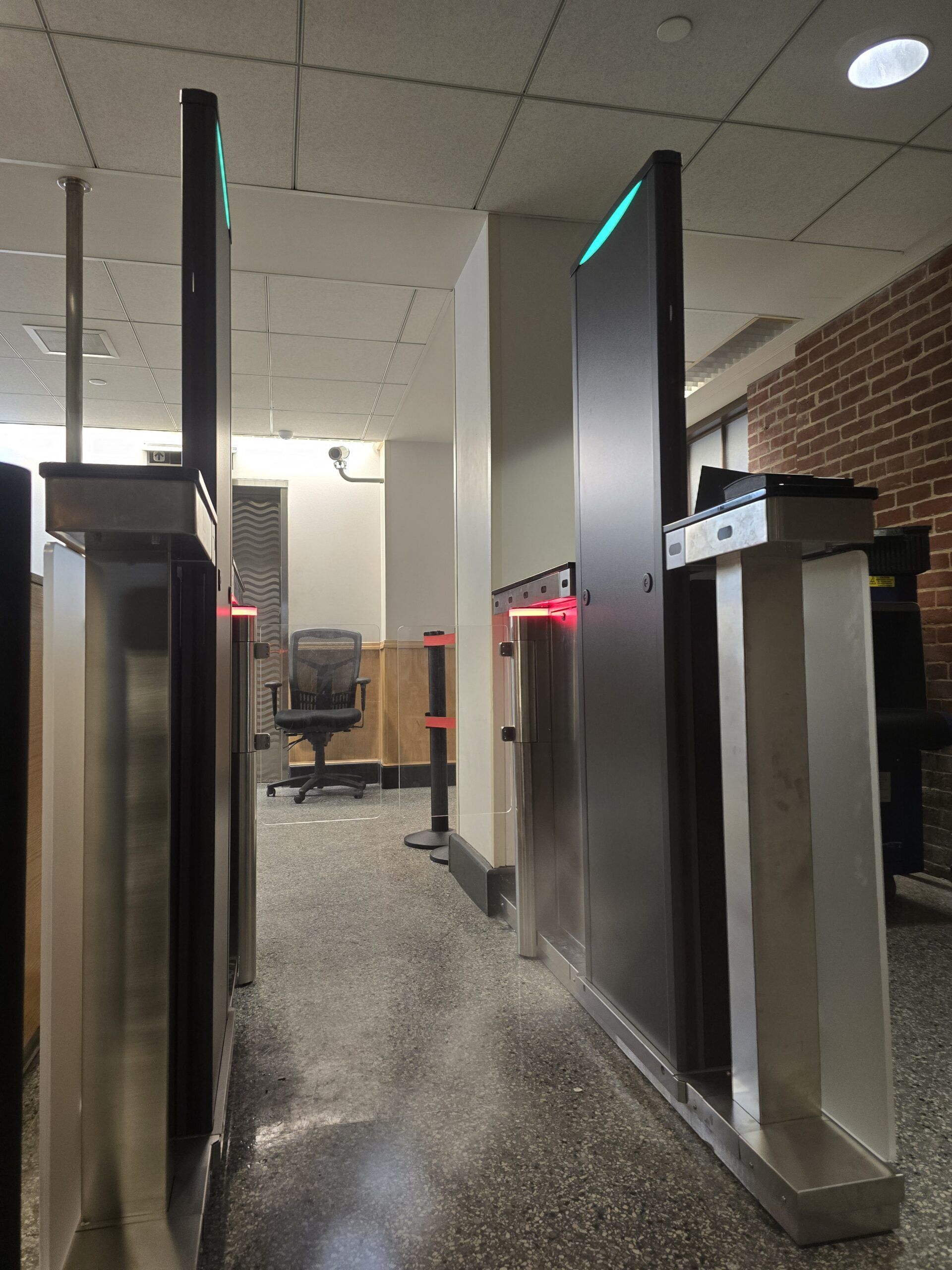
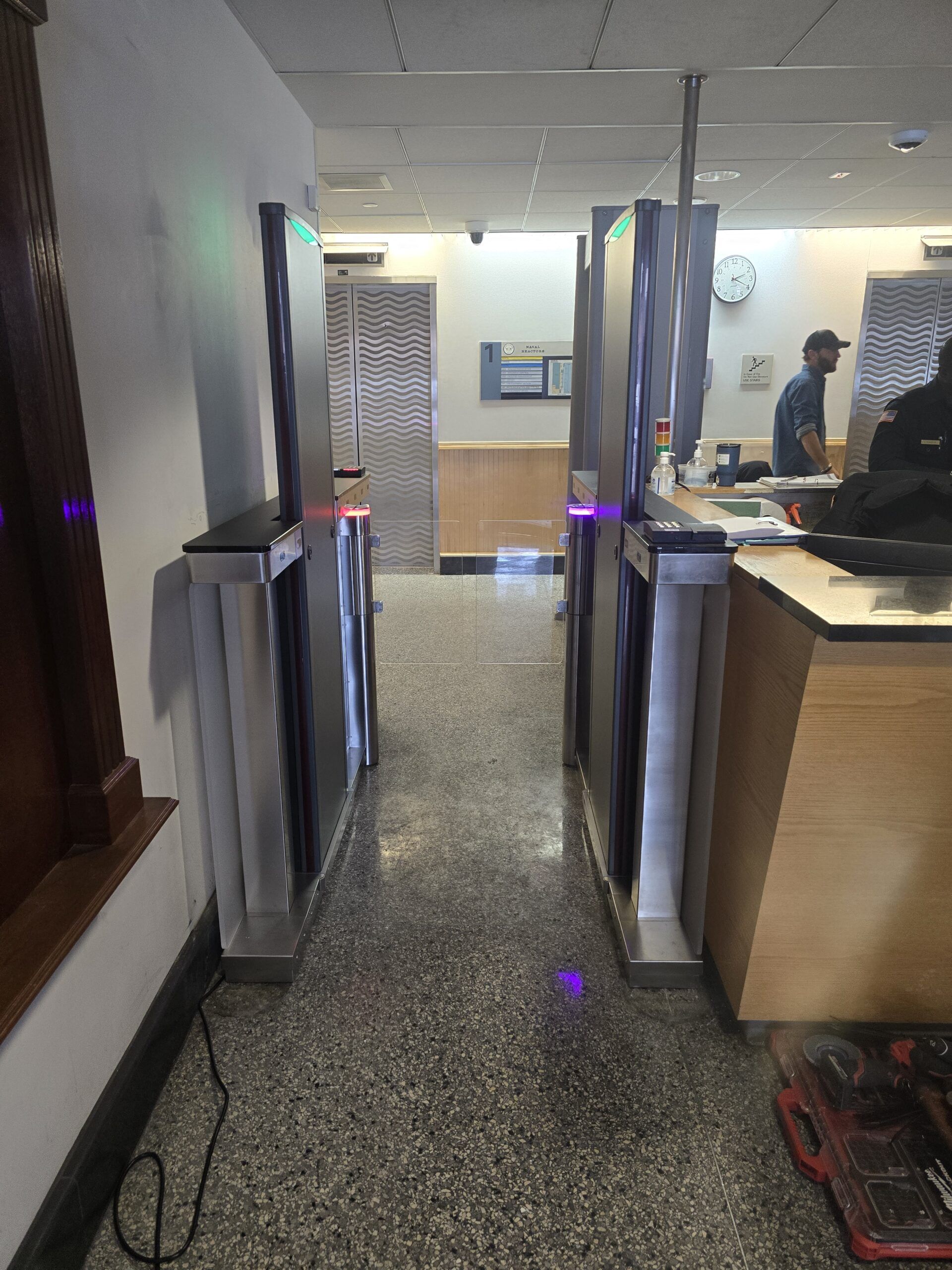
The exact inspection will depend on the type of equipment. An optical speed gate in a corporate lobby operates differently from a full-height rotating turnstile protecting an outdoor industrial perimeter. Usage levels, installation environment, age, and security requirements can also influence what deserves the most attention.
Depending on the system, technicians may inspect or test:
- Mechanical movement. Barriers and rotating components should move smoothly and consistently.
- Alignment and mounting. Equipment should remain properly positioned, level, and securely anchored.
- Sensors. Detection equipment should respond correctly as users approach and pass through the lane.
- Credential readers. Card, mobile, biometric, QR, or other readers should communicate properly with the access system.
- Locking behavior. The turnstile should reliably allow or restrict passage according to authorization.
- Emergency operation. Applicable fail-safe, fail-secure, and emergency egress behavior should function as designed.
- Electrical and communication components. Connections between the turnstile and access control equipment should be checked when troubleshooting intermittent problems.
Proper leveling and anchoring are especially important to the long-term mechanical performance of a turnstile. A system installed on an uneven surface or one that shifts over time can experience alignment issues that affect movement and reliability. This is one reason professional installation and ongoing service work together rather than being treated as completely separate concerns.
Regular inspection also provides an opportunity to identify aging equipment before a failure forces an immediate decision. In some cases, repairing or replacing a component is all that is needed. In others, an older turnstile may benefit from updated controls, readers, or access technology that allows it to work better with the facility's current security system.
How Often Should Commercial Turnstiles Be Inspected?
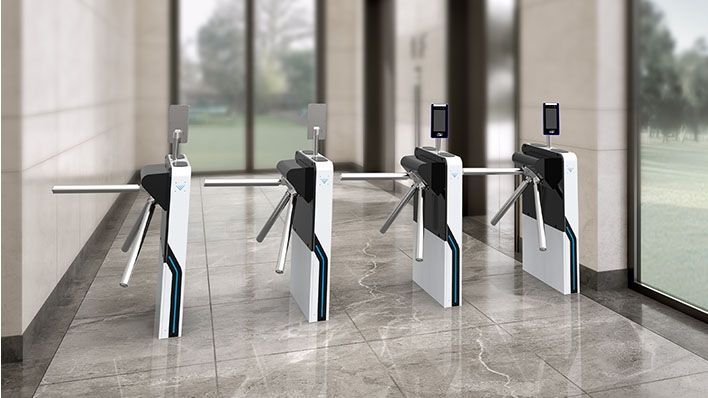
There is no single maintenance schedule that makes sense for every commercial turnstile. A turnstile in a small office lobby may experience relatively light daily use, while equipment at a stadium, manufacturing facility, transportation hub, university, or high-traffic corporate campus may process a much larger number of people.
The environment matters as well. An indoor optical turnstile operating in a climate-controlled lobby faces different conditions from a full-height turnstile installed outdoors at an industrial perimeter. Maintenance planning should reflect the type of equipment, frequency of use, environmental exposure, and importance of the entrance to daily operations.
Facility managers can also help by keeping track of recurring faults and changes in operation. If employees repeatedly report that one lane is slower than the others, or security personnel notice an increasing number of false alarms, those patterns can provide useful warning that service is needed.
Situations when you should consider having a turnstile checked rather than waiting for the next routine inspection include:
- A new or unusual mechanical noise develops
- A barrier begins moving differently than surrounding lanes
- Authorized credentials are intermittently rejected
- Sensors begin producing unexplained alarms
- The turnstile has been struck or physically damaged
- Flooring or construction work has occurred around the entrance
- The facility changes its access control or credential system
- A turnstile stops responding consistently during heavy traffic
Changes to the surrounding building can sometimes affect equipment too. Renovations, flooring replacement, electrical work, or changes to access control infrastructure may alter conditions around an existing entrance. Testing the turnstile after this type of work can help confirm that the complete system still operates correctly.
Repair, Upgrade, or Replace?
Not every turnstile problem means the entire system needs replacement. Many issues can be addressed through troubleshooting, adjustment, maintenance, or component repair. However, there comes a point when repeatedly repairing outdated equipment may make less sense than upgrading or replacing it.
Older equipment may also have difficulty supporting newer credential technologies or access control platforms. A facility that has transitioned from traditional cards to mobile credentials, biometrics, or cloud-based management may want to evaluate whether its existing turnstiles can be integrated effectively or whether modernization would provide better long-term performance.
When deciding whether to repair or upgrade, facilities may want to consider:
- The age and overall condition of the equipment
- How frequently the same problem returns
- Availability of replacement components
- Compatibility with current access control technology
- Changes in pedestrian traffic since the original installation
- Current security and accessibility requirements
- The operational impact of unexpected downtime
Modernization does not necessarily mean changing every component at once. Depending on the existing equipment, a facility may be able to update particular elements or integrate newer access technology while continuing to use portions of the current system.
Turnstile Maintenance and Repair in Atlanta, GA
Turnstiles are an important part of daily operations for many secured facilities. When they work properly, employees and authorized visitors move through with very little thought about the equipment. When a lane fails, however, the disruption can quickly become noticeable to security personnel, facility managers, and everyone trying to enter the building.
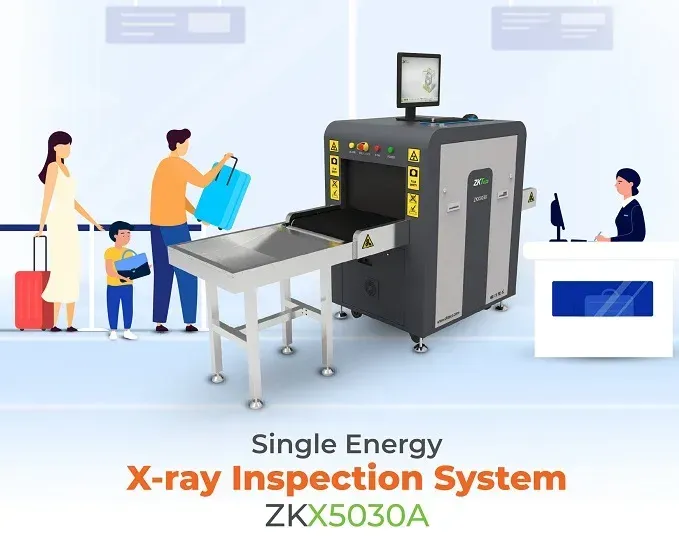
Atlanta Turnstiles provides installation, maintenance, repair, troubleshooting, and upgrade services for commercial turnstile systems. The company works with optical turnstiles, full-height turnstiles, access control integrations, metal detection equipment, X-ray screening systems, and other secure-entry technology. Its website specifically confirms maintenance and repair support for major turnstile manufacturers and facility types. :contentReference[oaicite:0]{index=0}
For facilities in Atlanta and throughout Metro Atlanta, preventive turnstile maintenance can help reduce unexpected downtime and identify developing problems before an important entrance becomes unusable. Atlanta Turnstiles also supports commercial and government projects throughout Georgia, Alabama, Tennessee, South Carolina, North Carolina, and other Southeast markets. :contentReference[oaicite:1]{index=1}
If your turnstiles are making unusual noises, experiencing credential problems, producing sensor errors, or simply are not operating as reliably as they once did, contact Atlanta Turnstiles to schedule professional service. Regular maintenance and accurate troubleshooting can help keep secure entrances functioning smoothly while extending the useful life of the equipment.
Recent Projects